Author, artist, naturalist, Rachelle Robinett
Sign: Leo sun, Aquarius moon, Pisces rising
Birthplace: Washington State, USA
Fave flower: Magnolia
Fave The Qi tea: Shangri-La Rose

1. You’re fluent in ancient plant wisdom and modern science — when they don’t immediately agree, how do you decide who gets the mic?
In my experience, they do agree. That said, science is still catching up with ancient wisdom in terms of its understanding of how exactly the plants work. I’ve always relied heavily (though not entirely) on science to both understand herbalism myself, and explain it to others (especially skeptics)—and readers of my book, Naturally, will see how many references there are! Science and herbalism work better together, in my opinion, and healthcare could benefit dramatically from the combination of the two.
2. You often talk about everything as a “–ness” — interconnected, awareness, aliveness. When did that way of seeing the world start to feel lived-in, not just understood?
What a rich question …! “-Ness” is one of my favorite topics, and an idea that I created and then lived in pursuit of understanding from the time I was a young girl. While it’s always been something I carried in my core, I’d say that in the last couple of years—with my move from NYC to Costa Rica and the accompanying dismantling of a life and transformational process of beginning a new one—I’ve come to actually feel what it is to merge with -ness. This time has been very dramatic, with tremendous amounts of change, ambiguity, discomfort—as well as more joy, beauty, and love than I’ve ever experienced. To ground this idea for readers, I would say: Live for what you most believe to be true, while remaining open to that belief being changed.

3. Spill the tea: you’ve talked about blue lotus before — what does it invite us to feel, not fix?
Blue lotus gently relaxes the nervous system, lifts mood, and supports a calm, mildly euphoric state without sedation. It’s traditionally used to ease stress, quiet anxious thought loops, enhance sensual awareness, and encourage restful sleep and vivid dreaming. Rather than targeting a specific symptom, its effects are subtle and whole-body—inviting relaxation, emotional openness, and a softened, receptive state of mind.
4. If you were the Vogue editor of herbalism, what trend would you put on the cover — and what would you quietly retire?
What a dream job! When I originally moved to NYC, I had more or less this ambition. ;)
For the cover: The chicest accessory in the world is your health—naturally. An aesthetic of intimacy with the body: pleasure, rhythm, plants as allies, and wellbeing that’s lived rather than performed.
To retire: Wellness culture is out, permanently. More products, more hacks, more control, and more trends leave us with less.

5. Costa Rica carries a different pace of aliveness. What keeps calling you back to that rhythm?
At first, I fell completely in love with the land (“as if it were a person” I often say). The lifestyle is just right for me: It’s extremely active, entirely outdoors, in elements that are often extreme (sun, sea, jungle, storms …), filled with joy (a Costa Rican way of life is to seek pleasure), and one of the healthiest in the world (it’s a Blue Zone). I became more myself here, faster than I could believe. I transformed into a purer version of myself. I made the move based entirely on instinct, which was bold to say the least. I chose to live here because this place quite literally gives me more life.

6. For people living fast, overstimulated lives, what’s one plant-based practice you return to when everything feels like too much?
Make tea! It’s an ancient ritual that—as is true of herbalism broadly—is as necessary and effective today as in years’ passed. Brewing tea requires a moment of pause, it’s an act of caring for ourselves while interfacing with nature, and—of course—there are benefits in the product, as well. As I write in Naturally, “This is the power of herbalism: The act of making tea can be as beneficial as the tea itself.”
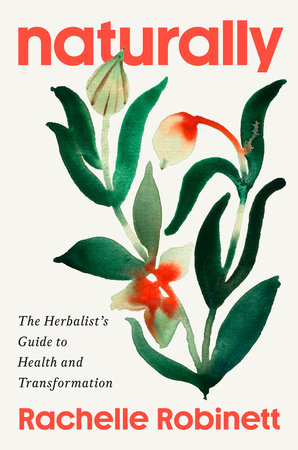
7. In Naturally, you say “tea is herbalism at work in a lot of lives.” What do you think people are missing about its quiet power?
I think tea is often seen as weak or simply indulgent, rather than as medicinal. While it is indulgent, it’s also effective, and can be deeply healing. There is also the “medicine” of our choosing to take care of our health, naturally, each time we brew a cup of tea. This has sneaky power and the more often we do it, the more we’re strengthening the muscle of choosing wellbeing over something less beneficial for us. The single act of making tea more regularly can quite literally result in health or life transformation over time. I’ve seen it happen again and again.
8. Fill in the blank: “Drink ___________. Feel __________.”
Drink life. Feel it all.
Learn more and see what Rachelle is up to at @rachellerobinett